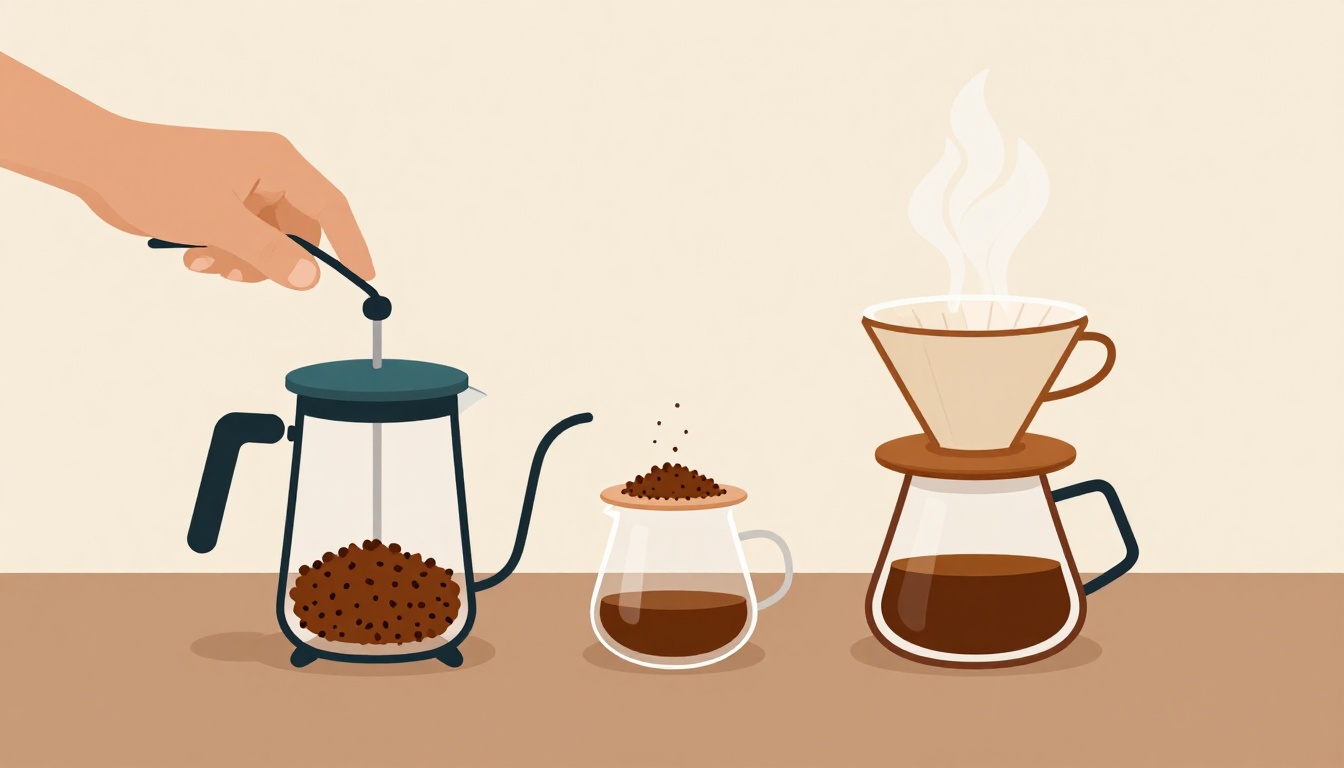
You’ve choked down bitter, muddy French press coffee one too many times. Or maybe your pour over tastes thin and sour, like dishwater. Most beginners hit these snags because grind size slips under the radar.
Grind size sets how fast water pulls flavor from your beans. Coarse grounds let water flow quick, so you get clean cups from French press. Fine grounds slow it down for pour over, pulling out sweetness without grit.
You don’t need fancy gear to fix this. A simple tweak to your grinder saves cash on tossed beans and wows friends at brunch. Plus, you’ll brew tasty coffee every time.
This guide breaks it down for total newbies. You’ll get exact grind sizes for French press and pour over, spot the key differences, and learn easy tweaks. No guesswork, just steps that work.
First, we’ll cover grind basics and tools you already own. Then, nail the perfect French press grind. After that, master pour over adjustments. Finally, troubleshoot common slips so you brew like a pro. Ready to upgrade your mornings? Let’s jump in.
Grind Size 101: How It Shapes Your Cup of Coffee
Grind size matters more than you think. It controls how water touches your coffee grounds. Think of it as the gatekeeper for flavor.
Start with the basics. Grind size ranges from powdery fine, like flour for espresso, to chunky coarse, like sea salt for cold brew. Pour over likes a fine grind, about table salt. French press needs coarse, like breadcrumbs. These sizes change the surface area of each particle. More area means faster flavor release.
Water flow changes everything. Fine grinds slow water down because they pack tight. Coarse ones let water rush through. This affects extraction, or how much taste pulls out. Too fine over-extracts. You get bitter, dry notes. Too coarse under-extracts. The cup tastes sour and weak.
Brew methods play a role too. French press uses immersion brewing. Grounds soak in water, like a tea bag steeping. Coarse grinds prevent sludge and over-extraction during the long steep. Pour over relies on percolation. Hot water drips through, like rain over rocks. Fine grinds create resistance for even pull.
Beginners often skip this step. They buy pre-ground beans or use one setting on their grinder. Beans go stale fast after grinding, so fresh matters. Yet grind size hides in plain sight. You blame the beans or water instead.
Get hands-on. Adjust your grinder burrs or blades. Feel the difference. Taste shifts follow. In short, master grind size first. Your cup improves right away.
Spotting the Signs: When Your Grind is Too Fine or Too Coarse
Taste tells the story. Sip your brew black, no milk or sugar. Note what hits your tongue.
Too fine grind over-extracts. Water lingers too long. Result? Bitter and astringent, like overcooked broccoli or burnt popcorn. The cup feels puckery, dries your mouth. French press brews past five minutes. Pour over clogs, drips slow.
Too coarse under-extracts. Water flies through fast. You get weak, watery, sour vibes, like lemon juice without sugar or underripe fruit. French press finishes quick, under four minutes. Pour over drains in seconds.
Track brew times as clues. French press should hit four to five minutes. Pour over takes two to three. Off times signal grind tweaks.
Keep a tasting journal. Jot notes like “bitter aftertaste” or “sour front.” Compare brews side by side. Soon, you’ll spot issues fast. Practice builds skill. Your coffee gets better each try.
Unlock Bold Brews: The Ideal Coarse Grind for French Press
French press shines with a coarse grind, about the size of sea salt or breadcrumbs. This lets grounds fully immerse in water without turning your cup into sludge. In addition, it prevents over-extraction during the standard four-minute steep. Water pulls just enough flavor, so you get rich body and preserved oils that make bold brews pop.
Aim for 800 to 1000 microns. That’s the sweet spot. Finer than that packs too tight. Coarser leaves you with weak sips. Burr grinders nail this best because they crush evenly. Blade grinders work for starters, but pulse them short to avoid fines. Test at home: pour your brew through a paper filter. No grit means you hit it right.
Start coarse every time. Brew a cup. Taste it black. Weak or sour? Grind a touch finer next round. Bitter or muddy? Go coarser. Adjust by 10 to 20 percent each try. You’ll dial it in fast. Benefits stack up: fuller mouthfeel, chocolate notes, no waste.
Step-by-Step: Dialing In Your French Press Grind
Follow these steps to perfect your grind. Use a standard recipe first: 30 grams coffee to 500 ml water. This builds a baseline.
- Measure your beans. Weigh 30 grams of fresh, medium-roast beans. Freshness matters because stale ones mask grind issues.
- Grind coarse. Set your grinder to coarse. For popular models, try these starting points: Baratza Encore at 28 to 32, Fellow Opus at 10 to 12, or Timemore C2 at 8 to 10 clicks from finest. Burr grinders give even results. Blades? Pulse 5 to 7 seconds.
- Brew the standard recipe. Heat water to 195 to 205 degrees F. Pour over grounds in your French press. Stir gently.
- Time the steep. Let it sit four minutes. Press down slow and steady. Pour right away.
- Taste and adjust. Sip black. Note strength, body, and aftertaste. Tweak grind by 10 to 20 percent next brew. Repeat until perfect.
Troubleshoot with this quick guide:
| Issue | Taste/Clues | Fix |
|---|---|---|
| Weak | Sour, thin, under four minutes | Grind finer by 10-20% |
| Muddy | Bitter, gritty, over five minutes | Grind coarser by 10-20% |
| Balanced | Full body, no off notes, four minutes | Keep it! |
Track changes in a notebook. Your first few tries teach the most. Soon, muscle memory takes over. Enjoy those bold, oil-rich cups every morning.
Crystal Clear Flavor: Mastering Medium Grind for Pour Over
Pour over calls for a medium grind, like coarse sand or table salt, around 500 to 800 microns. This size strikes a balance. Water flows through at just the right pace for even extraction in two to three minutes. As a result, you pull bright acidity and subtle notes without grit or mud.
Coarse grinds fail here. They let water rush too fast, like French press but without the immersion time. Your cup ends up weak and sour. Fine grinds clog the filter instead. Water backs up, leading to bitter over-extraction. Medium grind avoids both traps. It creates gentle resistance, so flavors bloom clean and clear.
In contrast, French press thrives on coarse for that full body and oiliness. Pour over highlights clarity though. Think crisp fruit tones over heavy chocolate. A gooseneck kettle helps too. Its thin spout lets you pour steady and control the flow. Benefits pile up: nuanced tastes shine, waste drops, and your brews impress.
Start with fresh beans. Grind right before brewing. Single-dose grinders keep it consistent because they handle one batch at a time. You’ll notice the difference fast. Ready to tweak? Follow these steps below.
Fine-Tuning Pour Over: Test and Tweak Your Grind Size
Test small changes to nail your medium grind. Use this baseline recipe: 20 grams coffee to 300 ml water. It scales easy for most drippers.
- Prep your medium grind. Set your grinder to medium. Baratza Encore hits 16 to 20, Fellow Opus 4 to 6, Timemore C2 4 to 6 clicks from finest. Weigh 20 grams beans first.
- Bloom the grounds. Pour 40 grams hot water (195 to 205 F) over them. Wait 30 seconds. This wets everything even and releases gases.
- Pour in circles. Add the rest in steady pulses. Spiral from center out. Aim for total brew time of two minutes 30 seconds. Note the drawdown.
- Taste and adjust. Sip black. Sour or thin? Grind finer next time. Bitter or dry? Go coarser. Shift by 10 to 20 percent per brew.
Consistency comes from practice. Use a single-dose grinder if you can. It avoids uneven batches from big hoppers. Track times and notes in a journal.
Variations matter by dripper shape. Cone drippers (like Kalita) need slightly finer medium for slower flow. Flat-bottom ones (like Hario V60) take coarser medium. Test both. Here’s a quick reference:
| Dripper Type | Grind Adjustment | Target Drawdown |
|---|---|---|
| Cone (V60) | Medium-coarse | 2:15-2:45 |
| Flat (Kalita) | Medium-fine | 2:30-3:00 |
Repeat brews side by side. Soon, your pour over delivers crystal-clear flavor every time. French press body feels heavy now by comparison. Enjoy the switch.
French Press vs. Pour Over: Grind Size Face-Off and When to Pick Each
You now know the ideal grinds for each method. French press loves coarse. Pour over needs medium. But how do they stack up head-to-head? This face-off highlights grind differences and helps you pick the right one for your mornings. In short, your choice depends on taste goals and time.
Grind size drives the core contrast. Coarse grounds suit French press immersion. They deliver bold body without sediment. Medium grounds fit pour over percolation. They yield clean clarity with controlled flow. Both hit great results when dialed in. Yet each shines in specific spots.
Check this side-by-side comparison. It sums up the essentials at a glance.
| Feature | French Press | Pour Over |
|---|---|---|
| Grind Size | Coarse (800-1000 microns, breadcrumbs) | Medium (500-800 microns, table salt) |
| Flavor Profile | Bold, full body, oily richness | Clean, bright clarity, nuanced notes |
| Forgiveness | High; handles small errors well | Precise; needs exact tweaks |
| Brew Time | 4 minutes | 2-3 minutes |
French press forgives rushed grinds because immersion evens extraction. Pour over demands precision. A slight shift clogs or rushes the pour. As a result, beginners often start with French press. It builds confidence fast.
Pick French Press When…
Go for French press on busy mornings. Its quick setup suits chocolatey or dark roasts. Those beans pair with coarse grinds for thick mouthfeel and low acidity. You get a forgiving brew that tastes great even if you skip perfect timing. In addition, it handles oily beans without waste.
Choose Pour Over For…
Select pour over when you want fruity single-origin or light roasts. Medium grinds pull crisp acids and florals. The clarity spotlights subtle flavors French press mutes. However, it requires steady pours. Use it for relaxed sessions where you savor each sip.
Test both with the same beans. Brew side by side one morning. Note how coarse grind builds body while medium grind sharpens brightness. This simple swap reveals your preference. It also guides your gear buys. No hybrids needed. Stick to one method first. You’ll brew better coffee either way.
Quick Fixes: Avoiding Grind Mistakes and Leveling Up Fast
You hit snags with grind size all the time. Static clumps your grounds. Stale beans kill flavor. Wrong scales mess doses. These slip-ups ruin French press body or pour over clarity. However, quick fixes turn it around. In addition, small habits build pro skills fast. Let’s spot pitfalls and patch them now.
Dodge These Top Grinding Traps
Inconsistent grinders create fines that clog pour overs or muddy French press. Static electricity clumps grounds, so water skips patches. As a result, extraction goes uneven. Stale beans lose punch because oils fade after two weeks. Wrong scales lead to light or heavy doses, shifting brew strength every time.
You spot them easy. Brews taste off despite tweaks. Pour over drains too fast or slow. French press leaves grit. Test one change at a time. That isolates the culprit.
Here’s a fast checklist of traps and clues:
| Trap | Clue in Brew | Why It Hurts |
|---|---|---|
| Static clumps | Uneven taste, patchy wet grounds | Skips extraction spots |
| Stale beans | Flat, lifeless flavor | Lost oils and volatiles |
| Wrong scale | Weak or harsh every batch | Dose swings 10-20% off |
Catch these early. Your cups stay consistent.
Easy Fixes and Habits That Stick
Purge your grinder first. Toss 5-10 grams before each dose. It clears old bits and static. Weigh doses always. Use a $10 scale for 30g French press or 20g pour over. Store beans airtight in a cool spot. They stay fresh two weeks longer.
Clean the French press plunger weekly. Sediment builds otherwise. Log experiments too. Note grind setting, brew time, and taste. “Baratza 20, 2:45 pour over, sour edge.” Next brew adjusts smart.
Upgrade cheap. Grab a burr grinder under $100 like Timemore C2. It crushes even, unlike blades. These steps take minutes. Yet they boost flavor big. You’ll sip bold French press or bright pour overs daily. Tweak once, enjoy forever.
Conclusion
You now grasp the essentials. French press thrives on a coarse grind like breadcrumbs. Pour over demands medium like table salt. Coarse builds bold body through immersion. Medium pulls clean clarity via percolation. These tweaks fix bitter mud or sour weakness right away.
Grab fresh beans and tweak your grinder this week. Brew both methods side by side. Note what hits your taste best. Share your results in the comments below. Experiment for fun, not perfection. Small changes yield big wins.
Soon, you shift from newbie slips to barista brews. Your mornings taste better already. Check back next for full recipes to pair with these grinds. Brew on.