You sip a cup of coffee one morning. It bursts with juicy strawberry and blueberry notes. Later, you try another. Zesty lemon and green apple shine through instead.
What’s behind this difference? Processing methods called natural and washed shape those tastes. Coffee cherries start the same. Processors choose a path that builds bold or bright flavors.
This beginner’s guide breaks it down. You’ll learn how each method works. You’ll see their flavor profiles up close. Plus, get tips to taste them yourself. First, we cover why processing matters. Then, natural’s sweet punch. Next, washed’s crisp clarity. Finally, a side-by-side test guide.
Why Processing Turns Coffee Cherries into Flavor Bombs
Coffee starts as a cherry. Ripe ones hide beans inside sticky fruit layers. Processors remove that fruit. Their choice sets the flavor path.
Think of it like fruit prep. You could cook cherries into jam. Sugars soak deep for thick sweetness. Or rinse them clean first. Fresh taste stays light. Processing does the same for beans. It pulls out origin traits like soil and sun.
Yet risks lurk. Over-fermentation sours beans. Mold creeps in during wet weather. Good methods control this. Natural and washed lead for beginners. Most specialty coffee picks one. They highlight terroir best. In short, processing crafts your cup’s soul.
Fun fact: Dry regions favor natural. Wet ones lean washed. Both boost body and aroma.
Shared Steps Every Coffee Bean Takes First
All beans follow basics. Farmers pick only ripe cherries by hand. They sort out defects like underripe or bugs.
Then paths split. Natural keeps fruit on. Washed strips it fast. Both aim for even drying. Early choices lock in flavor hints. For example, ripe cherries promise sweetness. Bad ones bring off notes.
This base keeps quality high. It lets processing shine.
Natural Processing Delivers Sweet Fruity Punch
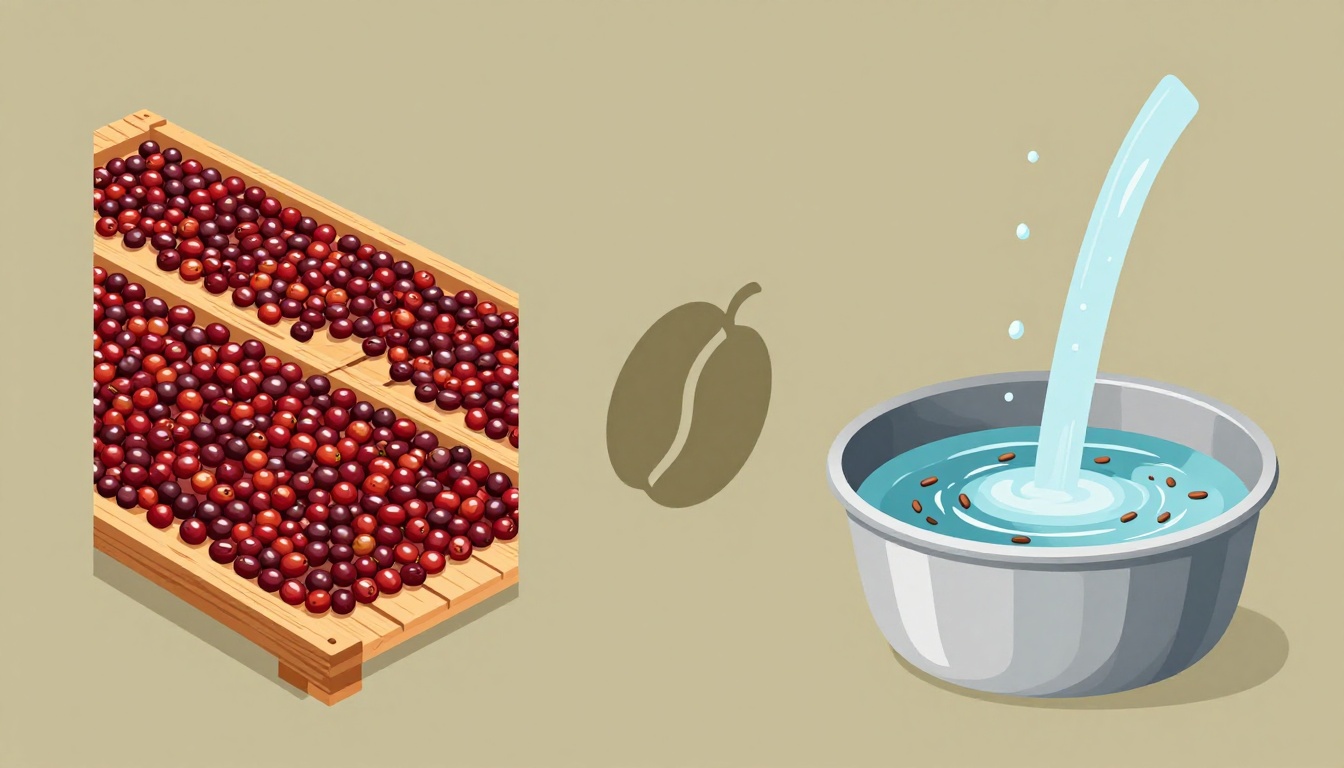
Natural processing dries whole cherries. No fruit removal at first. Sun basks them for weeks. Sugars from pulp soak into the bean. Fermentation brews magic inside. Yeasts eat sugars. They make alcohol-like notes.
Steps stay simple. Sort cherries. Spread them thin. Dry slow. Hull later. Pros include full body. Fruit explodes. Yet consistency dips. Rain risks mold. Dry spots like Ethiopia and Brazil thrive here.
In addition, it suits small farms. Less water needed. Beans gain syrup depth.
Breaking Down the Natural Drying Steps
- Spread cherries on patios or beds. Thin layers speed even drying.
- Rake them daily. This stops mold and heat pockets.
- Dry to 11% moisture. Takes two to four weeks.
- Hull the dried fruit. Reveal the bean.
African raised beds work best. Brazilian yards handle big loads. Rain pauses drying. Farmers cover fast. Vivid red piles turn brown. Beans emerge fruity.
Fruity Flavor Profiles That Make Natural Coffee Addictive
Natural coffee sings with strawberry and blueberry. Winey edges add complexity. Chocolate hides underneath. Tropical mango pops too.
Body feels heavy. Like syrup. Acidity stays low. Pour-over brew lifts fruit best. Drip pulls sweetness forward.
At home, note these: ripe berry up front. Boozy mid-note. Cocoa finish. Brew light roast. It amps fruit. Dark mutes it. Addictive for dessert lovers.
Washed Processing Crafts Crisp Acidic Clarity
Washed skips the fruit soak. Machines depulp right away. Skin goes. Mucilage ferments in tanks. Water washes it clean. Beans dry in parchment.
Pros shine in consistency. Origin flavors pop clear. Citrus leads. Labor runs high. Water use too. Rainy Colombia and Kenya master this. Enzymes break mucilage neat. No wild yeasts.
As a result, tastes stay predictable. Brewers love it.
Step by Step Through the Washed Method
- Depulp cherries fast. Remove skin.
- Ferment mucilage one to three days. In water tanks.
- Wash in channels. Clean rinse.
- Dry on raised beds. Parchment on. Two weeks tops.
Contrast hits hard. Natural dries whole. Washed strips early. Beds let air flow. Faster than patios. Beans whiten clean.
Clean Tastes That Pop in Washed Coffee
Lemon and lime lead. Green apple follows. Jasmine tea hints floral.
Body stays light. Acidity sparkles high. Vibrant and crisp. Black coffee shows it best. No milk hides zing.
Compare to natural. Washed skips heavy syrup. It favors precision. Iced brew chills brightness. Espresso packs punch.
Natural vs Washed Side by Side Taste Test Guide
Time to compare. Natural brings forgiving fruit. Washed demands clean brew. Labels note processing. Look for “natural Ethiopia” or “washed Kenya.”
Brew fair. Same origin. Same roast. Light suits both. Grinder fine for espresso. Coarse for pour-over. Log notes. Berry? Citrus?
This builds confidence. Pick bags by mood.
Quick Comparison Table for Your Coffee Hunt
Prep a side-by-side test. Use this table as reference.
| Aspect | Natural Processing | Washed Processing |
|---|---|---|
| Body | Heavy, syrupy | Light, clean |
| Acidity | Low to medium | High, vibrant |
| Flavors | Berry, tropical, wine, chocolate | Citrus, apple, floral, tea |
| Sweetness | High | Balanced |
| Consistency | Variable, defect risk | High, predictable |
| Regions | Ethiopia, Brazil (dry) | Colombia, Kenya (wet) |
Natural suits lattes. It coats milk thick. Washed fits iced. Zing cuts chill.
Match Each to Your Brew Style and Mood
Pick natural for cozy nights. Lattes or desserts pair sweet. Forgiving if brew errs.
Washed wakes mornings. Black or espresso pops acid. Iced refreshes summer.
Beginner tip: Buy two bags. Brew same. Log tastes. What pulls you? Sweet bold or crisp bright?
Ready to Taste the Difference?
Natural packs fruity bold. Washed delivers clean bright. Both reveal coffee’s heart.
Check bags for processing notes. Try one of each next shop. Brew simple. Note flavors.
Share your favorite in comments. Which wins your cup? Brew a natural pour-over this week. Hybrids blend both soon. Your palate leads the way.