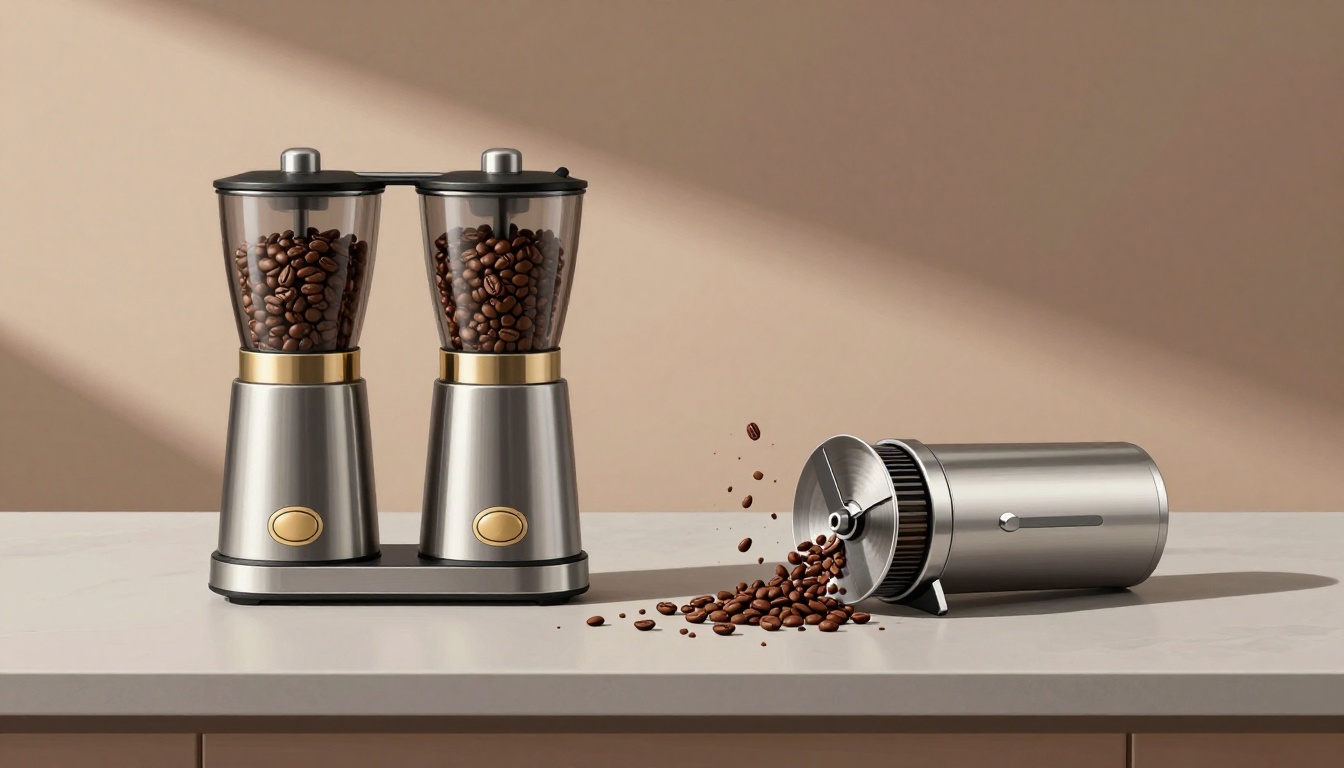
You’ve brewed that perfect cup of coffee, added the right beans and water, but the flavor falls flat—bitter in spots, weak in others. Uneven grinds cause this mess because they lead to inconsistent extraction. Particles too fine over-extract and turn bitter; coarser ones under-extract and taste sour.
That’s where burr grinders and blade grinders come in as your main options. Burr grinders crush beans uniformly between two surfaces for even particle size every time. Blade grinders chop like a blender, which often creates a mix of sizes.
In this post, we’ll break down their differences, pros, cons, and key factors like your budget and brewing method. You’ll see how to pick the one that delivers consistent results for your daily brew. Let’s dive into what sets them apart.
Unpack How Blade Grinders Work and Their Grind Quirks
Blade grinders resemble a tiny blender tucked into your kitchen drawer. A single sharp blade spins at high speed to chop coffee beans into fragments. You press one button to start, or pulse briefly for control. Shake the unit between bursts to nudge beans around. This action mimics using a food processor on nuts, where everything gets hacked but not sheared evenly.
However, results vary wildly. Powdery fines mingle with larger chunks, or boulders as some call them. Friction generates heat quickly, which scorches bean oils and mutes fresh aromas. In short, blade grinders suit quick jobs but reveal flaws under scrutiny. Let’s break down the upsides first, then the real issues.
Everyday Pros of Blade Grinders for Beginners
New to grinding? Blade models shine for simplicity and savings. They cost under $20 to $30, so you grab one without second thoughts. Small size fits any counter or cabinet, perfect for tight kitchens.
Ease stands out too. One button starts the spin; no dials or settings to fiddle with. Speed impresses during rushed mornings. In 10 to 20 seconds, you have grounds ready for drip coffee. Busy parents or office workers love this no-fuss routine.
Occasional brewers benefit most. You want fresh grounds without daily hassle. Cleaning takes seconds: pop the lid, wipe the blade with a dry cloth, done. They handle coarse French press grinds well, since uniformity matters less there.
Consider these top perks:
- Affordable entry point: Start cheap and upgrade later if needed.
- Compact design: Stores anywhere, travels easy for camping trips.
- One-touch operation: Ideal for groggy starts, no learning curve.
- Fast results: Grinds a week’s worth in under a minute.
For casual use, they deliver solid value.
Biggest Drawbacks in Consistency and Flavor
Uneven particles plague blade grinders most. Tiny fines over-extract, turning brews bitter. Bigger boulders under-extract, leaving sour notes. Your cup tastes inconsistent each time.
Heat buildup worsens it. Blades rub beans hard, raising temperatures over 200 degrees sometimes. Oils break down, aromas fade. Compare it to sifting flour riddled with lumps: some parts clump, others scatter.
Pulsing helps a bit. Short 2-second bursts, plus shaking, reduce boulders. Yet fines still form, and heat lingers. Repeatability suffers; same settings yield different results daily.
Precision methods expose flaws fast. Pour-over or espresso demand uniform sizes. Blade grinds fail here, channeling water unevenly. Casual drip coffee tolerates it better.
Key downsides include:
- Mixed particle sizes: Fines and chunks ruin balance.
- Heat damage: Scorches flavors, dulls freshness.
- Poor repeatability: Hard to match yesterday’s grind.
- Limited for fine methods: Struggles with espresso or pour-over.
Stick to basics, or consider burrs for better control.
See Why Burr Grinders Deliver Uniform Grinds Every Time
Burr grinders crush beans between two spinning surfaces, either flat or conical burrs. Think of it like a pepper mill or mortar and pestle that shears beans evenly, unlike a blade’s wild chop. You adjust settings precisely, from espresso-fine powder to coarse cold brew chunks. Electric models speed things up for daily use; manuals offer portability on the go. They generate little heat, keep blades from dulling, and produce the same grind every time. As a result, extraction stays even, and your coffee tastes better without guesswork. In contrast to blade grinders, burrs roll like a pin over dough for smooth results.
Standout Advantages for Taste and Control
Uniform particles make all the difference. They ensure balanced flavor because water extracts evenly from every bean bit. No more bitter over-extracted fines or sour under-extracted chunks. Espresso lovers avoid channeling, where water rushes through weak spots.
This precision suits every brew method. Drip coffee blooms perfectly. Pour-over flows steady. French press needs no sifting. Stepless adjustments let you dial in exact sizes; stepped ones offer reliable stops.
You’ll notice quieter operation too. No high-pitched whine like blades. Burrs last longer because they don’t dull quickly. Set the dial once, and you get the same cup daily. Single-origin beans shine brighter, revealing fruity notes or chocolate hints that uneven grinds hide.
Here are key benefits that frequent brewers swear by:
- Balanced extraction: Even particles mean full flavor without extremes.
- Method flexibility: Handles fine espresso to coarse brew seamlessly.
- Repeatable results: Match yesterday’s grind for consistent mornings.
- Long-term durability: Builds last years with minimal upkeep.
Upgrade to burrs, and your coffee routine transforms.
Potential Downsides and Who Might Skip Them
Burr grinders cost more, often $50 and up. Larger size takes counter space. More parts mean extra cleaning: empty the grounds, brush burrs, rinse hoppers.
A learning curve exists. You experiment with settings at first. Too fine clogs machines; too coarse weakens taste. However, practice pays off quickly.
Super casual users might skip them. If you brew once a week with pre-ground beans, blades or store packs suffice. Frequent brewers find the value worth it. Better taste justifies the spend for daily drinkers.
On the other hand, think about your habits. Occasional French press? Save cash. Serious pour-over fan? Burrs deliver control blades can’t match.
Compare the Two Side by Side to Find Your Winner
You know the pros and cons of each grinder now. So, how do they stack up directly? Burr grinders often win for serious brewers because they deliver even grinds every time. Blade grinders shine for beginners on a tight budget. Check this table to see the key differences at a glance.
| Feature | Blade Grinder | Burr Grinder |
|---|---|---|
| Consistency | Uneven mix of fines and boulders | Uniform particles for balanced extraction |
| Cost | $10–$40, super cheap | $40–$100+ entry level, premium higher |
| Size/Speed | Compact, grinds fast in seconds | Bulkier, takes 20–40 seconds |
| Heat | High friction scorches oils | Minimal heat keeps flavors fresh |
| Adjustment | Pulse and shake for rough control | Precise dials from fine to coarse |
Burrs pass grind tests better, like sifting through sieves where 80% of particles match size. Blades scatter sizes wildly. However, your needs decide the winner. Let’s match them to your routine next.
Match Grinder to Your Brew Style and Lifestyle
First, think about your brew method. Blade grinders work fine for quick drip coffee or French press. Coarse grinds hide uneven particles there, so you save time without fuss. However, pour-over or espresso demands precision; burrs excel because water flows evenly.
Volume matters too. Low daily use? Blades handle a few cups fast. High volume or flavor focus? Burrs keep taste consistent batch after batch. For example, if you chase bright acidity in single-origin beans, burrs reveal it better.
Lifestyle factors seal the choice. Apartments need quiet options; burrs hum softly unlike blade whirs. Tight counters favor blade’s small size. Travel often? Pick a manual burr grinder; it fits in bags and grinds without power. Daily commuters grab portable blades instead.
Ask yourself these to decide:
- Do you brew French press weekly? Go blade.
- Espresso or pour-over daily? Choose burr.
- Noise or space an issue? Weigh burr portability.
Your habits point to the right pick.
Budget Breakdown and Long-Term Value
Price tiers start low with blades at $10–$40. They fit impulse buys under $50. Entry burrs run $40–$100 for solid electrics. Premium burrs hit $100+ with stepless adjustments.
Blades seem cheaper upfront. Yet, bad grinds waste beans and time. You toss sour or bitter cups often. Burrs cut that loss because even extraction nails flavors first try. Over a year, you save on beans alone.
Unsure where to start? Grab a cheap blade. Test fresh grinds without risk. Love the results? Upgrade to burr later. Frequent brewers find burrs pay off fast through better taste and less waste.
In short, splurge on burrs if coffee matters daily. Stick to blades for casual sips on a dime. Your wallet and routine guide the smart buy.
Your Step-by-Step Plan to Pick the Right Grinder Today
You have the facts on burr and blade grinders. Now put them to work. This simple plan helps you choose fast. Start today, and enjoy even grinds tomorrow. Follow these steps in order. Each one builds on the last.
Step 1: Assess Your Brew Method
Think about how you make coffee most days. Drip or French press? Those pair well with blade grinders because coarse grinds forgive uneven particles. Pour-over or espresso? Burr grinders shine here. They deliver the uniform size water needs for steady flow.
List your top methods. Jot down if you switch often. Versatility favors burrs. For example, if you love experimenting with AeroPress, burrs give you control. Blades work for one-note routines.
Step 2: Count Your Daily Cups and Habits
How many cups do you brew each day? One or two? Blades handle that speed without fuss. More than that, or flavor chasers? Burrs keep taste steady batch after batch.
Consider your routine too. Rushed mornings call for quick blades. Slow weekends suit burrs’ precision. In addition, note if you travel. Portable manual burrs fit bags better than electrics.
Step 3: Check Your Budget and Space
Set a firm budget first. Blades cost $10 to $40, so they fit tight wallets. Burrs start at $40. Look for a basic electric burr under $60 if you want an upgrade without splurging.
Measure counter space next. Blades tuck away easy. Burrs need room, often 6 inches wide. However, slim models exist. Pick what fits your kitchen setup.
Step 4: Test Grinds If You Can
Head to a store with grinders on display. Run a few beans through blade and burr models. Feel the texture. Sift burr grinds; they look even. Blade ones mix fines and chunks.
Brew a quick sample if possible. Taste the difference. This hands-on test beats online guesses. As a result, you buy with confidence.
Step 5: Buy, Experiment, and Enjoy
Grab your match. Start simple. After purchase, tweak settings daily. Note what works for your beans. Fine-tune for each brew type.
Consistent grinds turn home coffee into cafe-quality sips. You save money on beans and boost flavor. Your morning ritual just got better.
Conclusion
Blade grinders fit budget basics and quick brews like drip or French press. Burr grinders deliver consistent grinds for precision in pour-over or espresso. So, pick based on your habits, not hype.
Even particles fix those bitter or sour cups from uneven extraction. You get balanced flavor every time because water pulls evenly from each bit. As a result, your coffee tastes cafe-fresh daily.
Share your brew setup in the comments below. Try a new grind tomorrow, and notice the difference. Better cups wait ahead.