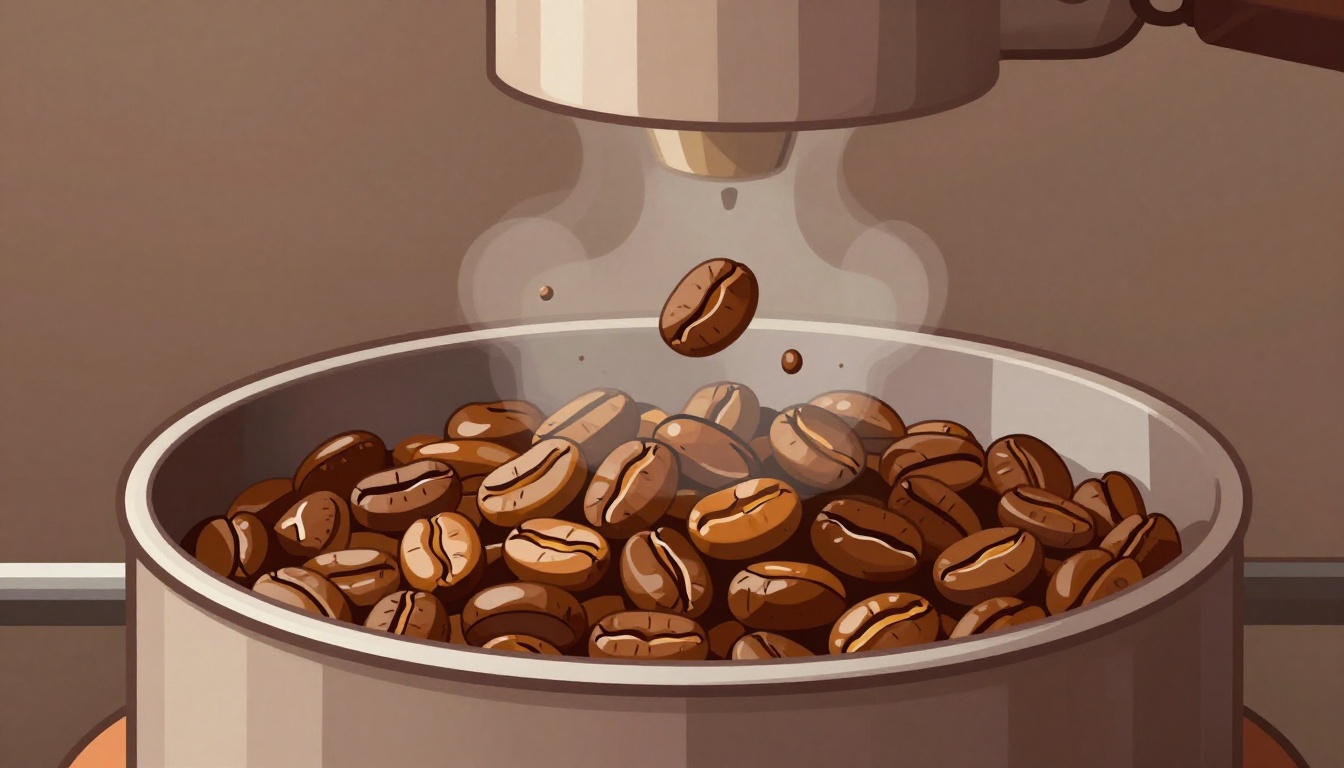
Picture this: you’re roasting coffee beans at home, and suddenly they start popping like tiny fireworks. That sound marks first crack, a key moment in the roast cycle. Beans expand, release steam, and shift toward bold flavors.
Many home roasters chase perfect cups but miss this milestone. It happens around 385-405°F when internal pressure splits the bean’s shell. Spot it right, and you control taste; ignore it, and your brew turns sour or flat.
You will learn what first crack means, how to detect it with your senses, and why it shapes flavor. By the end, your next roast will taste better.
What First Crack Reveals About Your Roasting Progress
First crack tells you the roast has hit a turning point. Beans reach about 385-405°F. Moisture turns to steam and escapes with a pop.
This comes after the drying phase, where beans lose water and turn yellow. Then the Maillard reaction browns sugars for initial aromas. First crack follows, right before development time.
Gases build inside from heat. Pressure causes the shell to crack open. Think of it like popcorn kernels swelling in a pan.
Beginners often overlook it because early roasts stay quiet. They charge beans too cold or heat too slow. As a result, cracks arrive late or weak.
Pressure inside mimics a pressure cooker. Green beans hold 10-12% water plus CO2. Heat changes that fast.
The Science Simplified: Why Beans Crack
Green coffee beans pack water, sugars, and trapped gases. Heat first dries them out. Water becomes steam.
Sugars brown during Maillard. CO2 expands too. The shell can’t hold it, so it splits.
Arabica beans crack at lower temps, around 385°F. Robusta needs more, up to 405°F. Bean density plays a role.
For example, dense high-grown beans build pressure slower. Lighter ones pop sooner. Always check your batch.
First Crack’s Spot in the Full Roast Timeline
Roasts follow clear phases. Drying lasts first few minutes; beans yellow and shrink a bit.
Browning follows. Aromas shift from grassy to sweet. First crack starts around minute 8-12.
Development comes next. Flavors peak here for 4-8 minutes. Second crack signals the end, but it’s riskier.
First crack closes the ramp-up. It opens the door to taste control. Most light roasts finish soon after.
Spot First Crack Before Your Beans Overroast
Use your senses to catch first crack. Listen for pops, watch color change, sniff the air, and check temp.
Equipment matters. Popcorn poppers give clear sounds but uneven heat. Drum roasters muffle noise, so rely on visuals.
Record roasts with a phone app. Note times and cues. This builds your skill over batches.
Chaff can trick you. It flies early and crackles. Real first crack involves most beans.
Listen Closely to the Signature Popping Sound
Pops start sudden, like bacon in a hot pan. They sound sharp but not too loud, similar to mild popcorn.
About 20-50% of beans crack first. The rhythm builds, then slows over 1-2 minutes. It quiets after.
Second crack differs. It rings higher and faster, like rice crispies. Train your ear with practice runs.
Use a phone mic near the roaster. Log the audio. Play it back to match future roasts.
Watch for Color Shifts and Chaff Ejection
Beans shift from yellow-green to light cinnamon brown. Surfaces look drier and even.
Chaff, the thin silver skin, puffs out like feathers in the wind. It swirls as beans tumble.
Agitate for a good view. Cinnamon rolls mark city roast level. Compare to charts online.
Uneven color means hot spots. Stir more if needed. Even cracks follow even heat.
Sniff the Aroma Turning Delicious
Early roasts smell like hay or grass. First crack brings toast and bread notes.
Maillard finishes here. Sweet, nutty scents rise. Your kitchen fills with promise.
Train your nose. Roast small samples to medium. Note the change each time.
Over time, you link smells to profiles. Fruity beans peak with citrus hints post-crack.
Track Temperature for Precision
Bean mass hits 390-410°F at first crack. Use an infrared thermometer for the batch.
Rate of rise slows right before. It drops from 30°F per minute to 15°F.
Bean probes lag by 30 seconds. Point IR at the center for accuracy.
Light roasts crack at lower end. Dark ones push higher. Log your profiles.
Master Flavor Control Starting at First Crack
First crack usually hits at 8-12 minutes. It starts your 4-8 minute development window.
End too soon, and coffee tastes sour with high acids. Stretch too far, and bitterness takes over.
Post-crack, acids fade. Sugars caramelize into sweet notes. Timing builds the cup you want.
Light roasts drop 30 seconds after. They keep bright fruits. Mediums go 2-4 minutes for balance.
Launchpad for Peak Flavor Development
Volatiles form right after. They create chocolate, fruit, or floral tastes.
Short development favors bright acids. Longer brings caramel depth.
Aim for 20-25% of total roast time post-crack. That’s your sweet spot.
For example, a 10-minute roast spends 2 minutes developing. Test cups to confirm.
Time It Right to Avoid Common Pitfalls
Grassy cups come from early drops. Flat brews result from long holds.
Start a timer at first pop. Drop at 1:30 for lights, 4 minutes for darks.
Cup your roasts. Note flavors. Adjust next time.
Uneven development means poor charge. Heat beans to 400°F first.
Practical Tips to Nail First Crack Every Time
Preheat your roaster empty. Charge beans into hot air at 350-400°F.
Log everything. Track charge temp, first crack time, and end weight. Losses should hit 15-18%.
Practice with cheap robusta. It cracks loud and clear. Move to pricey arabica later.
Join online forums. Share logs for feedback. See others’ profiles.
Troubleshoot weak cracks. They signal low heat or wet beans. Dry storage helps.
Scale up. Match pro curves once basics click. Consistency follows.
Your roasts improve fast with focus.
Spotting first crack with sound, sight, smell, and temp gives you control. It turns average roasts into great ones.
Next time, listen close and time it right. Share your roast logs in the comments below. Subscribe for more home roasting tips.
Your best cup waits just after that pop.