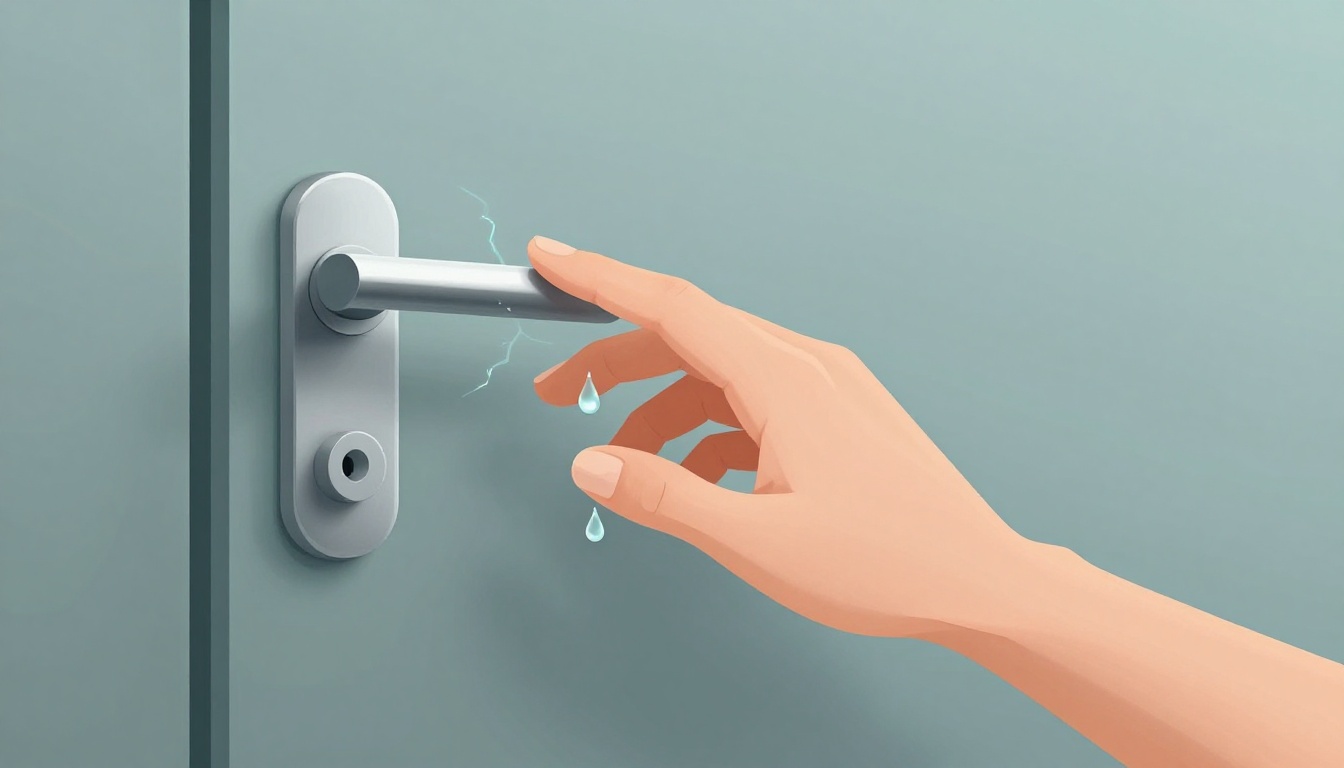
You step out of your car after a quick grocery run. Your hand touches the door handle. Zap! A sharp shock jolts you. Static charge strikes again. It happens on doorknobs, clothing, even pet fur. This imbalance of electric charges builds up quietly until it discharges with a painful spark.
Most people grab dryer sheets or sprays to fight it. Those work sometimes. Yet they leave scents or residues. Here’s a better trick: a single water droplet. It neutralizes static charge fast, without chemicals. You need no products. It works anywhere, from home to office.
This post breaks down the science of static charge. You’ll learn why friction causes it. Dry air makes it worse. Water droplets discharge it through conduction. Plus, get a simple step-by-step guide. You’ll also find tips and other methods. Ready to end those shocks?
What Causes Static Charge? The Simple Science Behind Those Shocks
Static electricity comes from extra electrons piling up on a surface. Objects gain a negative charge or lose electrons for a positive one. Atoms make up everything. Protons sit in the nucleus with a positive charge. Electrons orbit outside with negative charge. Normally, they balance.
Friction changes that. When materials rub, electrons shift from one to the other. One material grabs electrons. The other loses them. This creates opposites: negative and positive charges. They attract until they touch and spark.
Think of electrons like kids sharing toys. One group hogs them all. The other has none. Chaos follows until they even out. Everyday rubs cause this. Feet shuffle on carpet. Hair brushes a comb. A balloon sticks to your sweater.
Dry air keeps charges stuck. Water vapor helps them leak away. Without it, static builds. Winter heating drops humidity. Shocks spike then. Lightning acts like mega static. Clouds rub and charge up. They discharge in bolts.
Current electricity flows steadily in wires. Static sits still until triggered. It jumps gaps with sparks. No wires needed.
How Friction Turns Neutral Objects into Charge Magnets
Different materials hold electrons tighter. Scientists call this the triboelectric series. Wool beats plastic. It steals electrons easy. Nylon shoes on carpet? Classic combo. Shoes end positive. Carpet goes negative.
Your hair stands after brushing. Positive strands repel each other. Negatively charged comb attracts paper bits. Try it: rub a comb on wool. Bits jump to it.
Feet on synthetic rugs charge socks. Touch metal. Zap. Pets get it too. Fur rubs coats. Sparks fly near their noses.
Winter worsens everything. Low humidity traps charges. Indoor air dries out. Heating systems suck moisture. Static loves that setup.
The Role of Dry Air in Making Static Charge Stick Around
Humidity fights static. Water molecules conduct tiny charges. They carry electrons away. Charges neutralize before building.
Below 40% humidity, problems start. Shocks hit often. Tests show sparks common under that level. Summer sweat helps. Air holds more vapor then.
Heating dries rooms fast. Forced air blows moisture out. Offices and homes suffer. Plants add humidity naturally. They release water vapor.
Dry skin worsens it too. Hands crack. They hold charge longer. Lotion helps a bit. It adds moisture back.
Why Water Droplets Are a Static Charge Superhero
Water conducts electricity better than dry air. Pure water resists. Tap water has ions from salts. They carry charge. A droplet touches positive and negative spots. Electrons flow. Neutrality returns.
Water molecules polarize. One end attracts positives. The other pulls negatives. They align around charges. This pulls opposites together. Discharge happens quick.
Mist your air. Humidity rises. Static drops. Droplets work instant on spots. No waiting.
Charged balloon sticks to wall. Wet finger touches it. It falls. Water bridged the gap. Ions let charge escape.
Insulators like plastic hold charge. Water breaks that. It turns surfaces conductive short-term. Science backs this. Studies show water discharges static faster than air.
This method stays natural. No sprays needed. Costs nothing. Portable too. Sink nearby? You’re set.
Water’s Secret Weapon: Ions That Let Charges Escape
Tap water dissolves minerals. Sodium and chloride split. They become ions. Positive and negative. They move free.
Droplet spans charged areas. Ions shuttle electrons. Circuit completes. Spark or silent discharge follows.
Size counts. Tiny droplet touches both sides. No soak needed. Physics calls it capacitance drop. Charge spreads out. Energy lowers.
Pure distilled water fails. No ions. Everyday tap shines. Room temp best. Cold slows ions a touch.
Quick Guide: Reduce Static Charge Instantly with One Water Droplet
Spot the charge first. Hair rises. Mild zap on touch. That’s your cue.
Follow these steps:
- Wet your fingertip lightly. Use tap water. No drip. Just damp.
- Touch the charged spot. Doorknob, sleeve, screen. Gentle press.
- Feel or see discharge. Tiny spark or warmth. Gone now.
- Dry off if needed. Repeat for big areas.
Works on clothes mid-day. Car doors before exit. Phone screens too. Fingertip gives control. Precise spot.
No sink? Carry a small spray bottle. Mist light. Same effect.
Safe for most surfaces. Skip insides of electronics. Water inside risks shorts.
Troubleshooting: When the Droplet Trick Needs a Tweak
Super dry air fights back. Add room humidifier first. Then droplet.
Thick sweaters need two drops. Rub in light. Pet fur? Mist fur brush.
Delicates like silk? Test small spot. Avoid soak.
Lotion rubs fail often. Greasy mess. Water cleans up easy.
Static returns fast in dry spots. Combine with humidity boost.
Beyond Water: Other Proven Ways to Keep Static Charge at Bay
Water works quick. Pair it with habits for lasting calm.
Use a humidifier. Sets 45-55% humidity. Static vanishes.
Touch metal with key first. Grounds you before knob. Sparks go to ground.
Wear cotton. Synthetics charge more. Mix fabrics smart.
Dryer balls tumble clothes. They cut friction. Skip sheets if scents bug you.
Houseplants raise moisture. Spider plants excel. Low care.
Aluminum foil myths? Little help. Balls snag less.
Metal soil stakes ground laundry. Old trick. Effective.
Water wins for speed. No gear needed. Use it first.
Static Charge Meets Its Match
Friction steals electrons. Dry air traps them. Water droplets let ions flow. Charges balance out. Simple science ends shocks.
Grab that droplet next time. It neutralizes instant. No fuss. Works everywhere.
Try it today. Walk carpet-free. Touch doors calm. Share your wins below. What shocks you most?
Boost humidity long-term. Stay shock-free. Small tweaks change daily gripes. Science makes life smoother.